How pricing works
Every 3D printing job is different, so we price each one on its own rather than from a fixed list. Two parts that look similar can cost quite different amounts once their size, material and detail are taken into account.
The good news is that there is no tooling to pay for. With injection moulding, a mould has to be made before the first part, which makes one-offs and short runs expensive. With 3D printing, a single part is priced on what it takes to design and print, so one-offs are realistic.
The flip side is that the cost of each printed part doesn’t fall as sharply with quantity as it does with moulding. Below we explain the main things that affect the price, so you know what to expect before you ask for a quote.
Cost factors
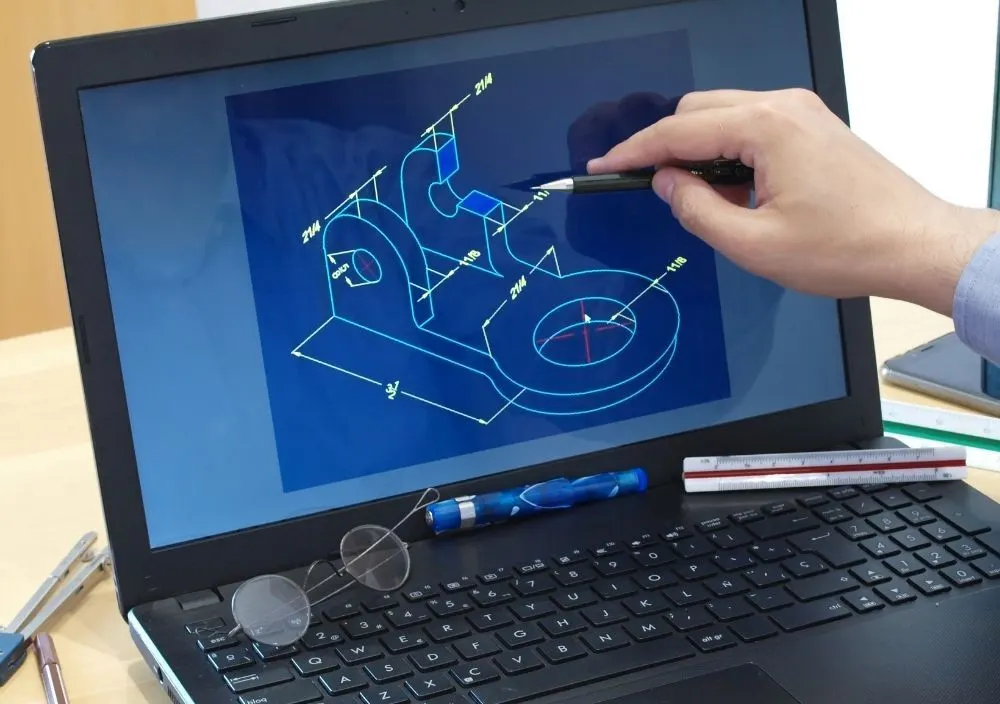
These six factors make up almost every 3D printing quote. Knowing them helps you see where the money goes and where there is room to save.
Larger and more solid parts use more material and take longer to print. Parts bigger than one print run are printed in sections, which adds time.
PLA is the most economical option for concept models. Engineering plastics and carbon-fibre composites cost more but give the strength some parts need.
Fine detail and smooth surfaces mean thinner layers and a longer print. Machine time is one of the biggest parts of the price.
A print-ready file keeps the cost down. If we need to create the 3D model from a sketch, drawing or broken part, the design time is included in your quote.
Preparation is shared across a batch, so the price per part usually eases as quantities grow. At high volumes, injection moulding may become cheaper.
Any finishing a part needs after printing, such as removing supports or extra work on the surface, adds time to the job.
Comparing options
How the cost of 3D printing compares with injection moulding, depending on how many parts you need.
| Option | Upfront cost | Cost per part | Best for |
|---|---|---|---|
| A one-off 3D print | None beyond any design work | Highest per part, but no tooling to pay for | Prototypes, replacement parts, models |
| Small batch 3D printing | None beyond any design work | Eases a little as quantities grow | Short runs, test markets, jigs and fixtures |
| Injection moulding | A mould must be made first | Low, and falls as volumes rise | Large runs of a proven design |
Not sure which is right for your quantity? Read about small batch 3D printing and injection moulding, or ask us and we will advise.
Saving money
A few choices made before printing can make a real difference to the price.
Getting a quote
Quotes are free and there is no obligation. The more you can tell us at the start, the more accurate the price will be.
A 3D file such as STL or STEP is best. Otherwise, send a sketch, a drawing or photos of the part next to a ruler.
Let us know how many you need now and whether you are likely to need more later.
Tell us where the part will be used, what loads or temperatures it faces and how it should look.
If you need the parts by a certain date, tell us so we can confirm the timescale with your quote.
Send us your file or photos for a free, no-obligation quote, or call us Monday to Friday, 8am to 6pm.
Questions
The price depends on the part’s size, material, detail and quantity, so we need to see a file, drawing or photos first. Once we have them, the quote is free.
Usually not, because there is no mould or tooling to pay for. A single part is priced on the design and print time it needs, which is why 3D printing suits one-offs and prototypes.
Only if we need to create or rework the 3D file. If you send a print-ready file there is no design time, and if CAD design is needed it is included in your quote.
Usually a little, because preparation is shared across the batch. Each part still has to be printed, though, so at high volumes injection moulding is often the more economical route.
PLA is inexpensive and quick to print, so it suits early concept models. We will recommend the most cost-effective material that still does what your part needs.
Often, especially when the alternative is replacing a whole machine or the part is no longer made. Our legacy parts service recreates the part and prints a replacement.
Our services